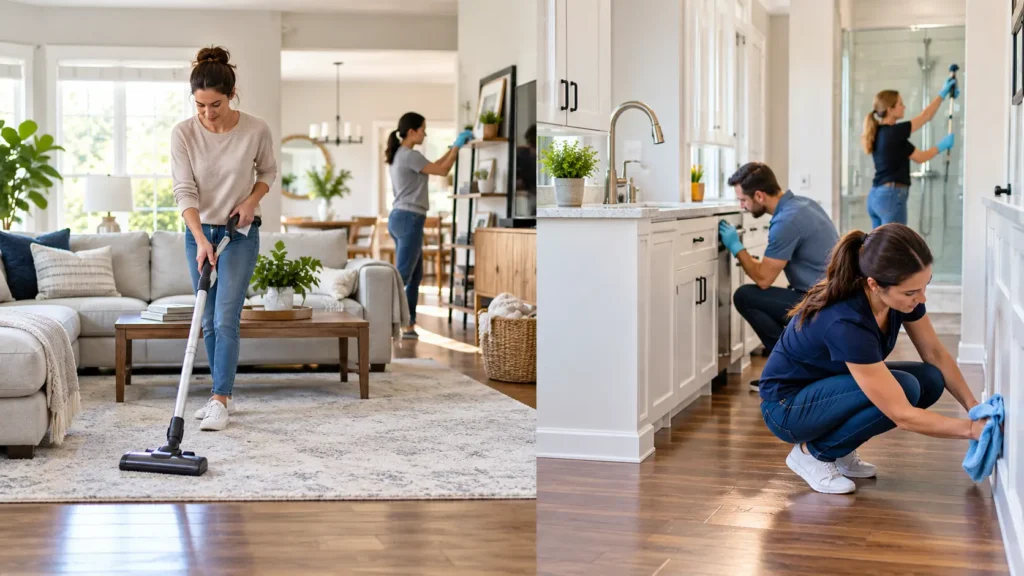
Standard cleaning vs deep cleaning is one of the most common comparisons homeowners make before booking a professional cleaning service. Both options can make a home feel fresher, but they solve different problems. Standard cleaning maintains a home that is already in reasonably good condition. Deep cleaning targets accumulated grime, neglected details, and hard-to-reach areas that routine visits usually do not cover.
The best choice depends on the current condition of your home, how recently it was professionally cleaned, whether you have children or pets, and whether you are preparing for a move, guests, or a special event. This nationwide guide explains what each service commonly includes, what may cost extra, and what to ask before booking a house cleaning service in the United States.
Quick Answer: Standard Cleaning vs Deep Cleaning
Choose standard cleaning when your home receives regular upkeep and you mainly need dusting, vacuuming, mopping, kitchen surface cleaning, and bathroom maintenance. Choose deep cleaning when buildup is visible, detailed areas have been neglected, or the home has not had a thorough cleaning in several months.
| Category | Standard Cleaning | Deep Cleaning |
|---|---|---|
| Main goal | Maintain cleanliness | Remove accumulated buildup |
| Best for | Weekly, biweekly, or monthly service | First visits, seasonal resets, and neglected homes |
| Time required | Usually shorter | Usually longer |
| Detail level | Visible and frequently used surfaces | Edges, fixtures, buildup, and overlooked areas |
| Typical price | Lower | Higher because more labor is required |
When comparing standard cleaning vs deep cleaning, remember that companies do not all use the same checklist. A task considered standard by one company may be an add-on with another. Always compare written service lists rather than relying only on the name of the package.
What Is Included in a Standard House Cleaning?
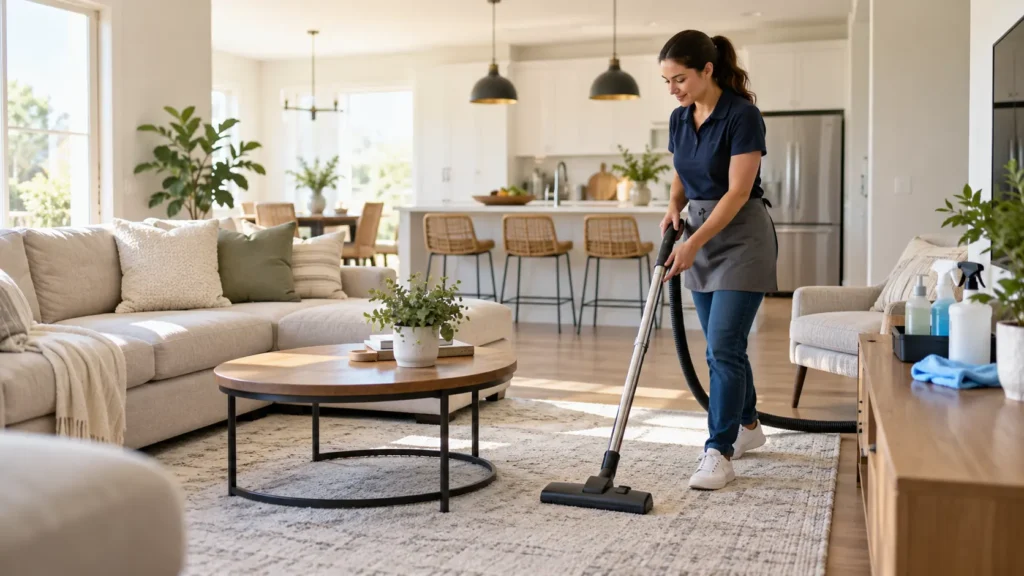
A standard cleaning, sometimes called a regular, basic, or maintenance cleaning, focuses on the areas people use most often. It is intended to prevent ordinary dust, crumbs, soap residue, and floor dirt from building up between visits.
Kitchen
- Wiping countertops and backsplashes
- Cleaning the sink and faucet
- Wiping the exterior of major appliances
- Cleaning the stovetop surface
- Wiping the outside of cabinets when needed
- Emptying trash
- Vacuuming and mopping the floor
Bathrooms
- Cleaning sinks, faucets, counters, and mirrors
- Cleaning toilets
- Wiping tubs and shower surfaces
- Removing light soap residue
- Emptying trash
- Vacuuming and mopping floors
Bedrooms and Living Areas
- Dusting accessible furniture and surfaces
- Vacuuming rugs and carpets
- Mopping hard floors
- Making beds when requested
- Emptying wastebaskets
- Light tidying of already organized areas
In the standard cleaning vs deep cleaning decision, standard service works best as part of a consistent routine. If you are unsure whether weekly, biweekly, or monthly visits make sense, use our house cleaning schedule guide to compare the options.
What Is Included in a Deep Cleaning?
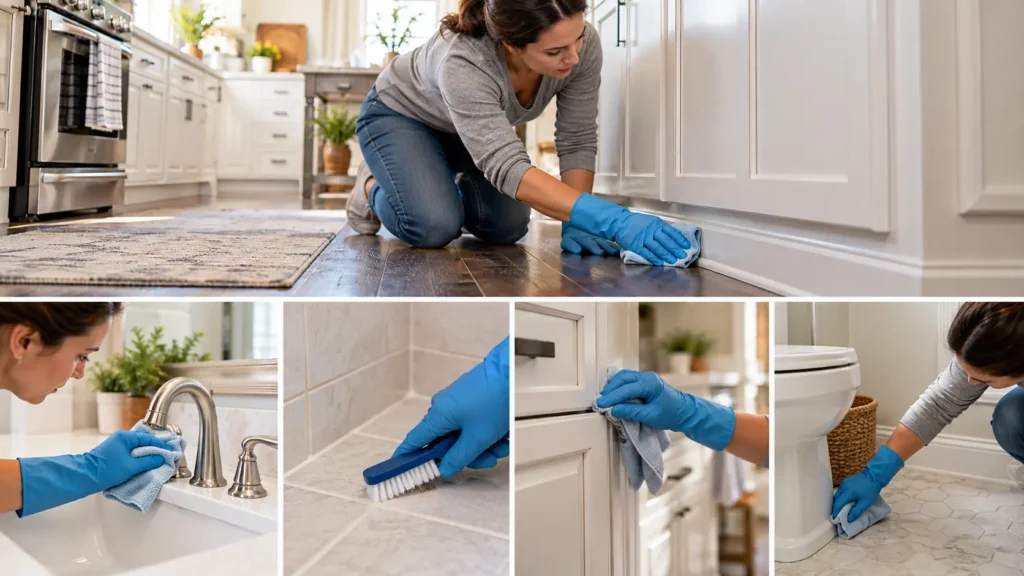
In a standard cleaning vs deep cleaning comparison, deep cleaning includes the core tasks of a standard visit plus more detailed work. The cleaner spends additional time on buildup, corners, trim, fixtures, and surfaces that are not addressed during every maintenance appointment.
Common deep-cleaning tasks may include:
- Detailed cleaning of baseboards, door frames, and window sills
- Removing heavier soap scum from tubs and showers
- Cleaning around faucets and bathroom fixtures
- Wiping doors, handles, light switches, and reachable trim
- Dusting ceiling fans, vents, blinds, and light fixtures within safe reach
- Cleaning the exterior of cabinets in greater detail
- Cleaning behind or underneath small movable items
- Removing grease buildup from kitchen surfaces
- Cleaning appliance exteriors and accessible edges
- Vacuuming upholstery when included
- Detailing floor edges and corners
- Cleaning reachable interior glass and mirrors
Mineral deposits and hard-water residue may require extra time or a specialty treatment. If shower doors are cloudy, see our guide on how to remove hard water stains from shower glass before deciding whether to handle the area yourself or request an add-on.
Tasks That May Not Be Included
Even a deep cleaning is not automatically an unlimited, top-to-bottom restoration. Many companies exclude specialty, hazardous, or time-intensive work unless it is requested and priced separately.
- Inside ovens and refrigerators
- Inside kitchen cabinets and drawers
- Interior or exterior window washing
- Carpet shampooing or steam extraction
- Exterior pressure washing
- Wall washing and paint stain removal
- High chandeliers or surfaces requiring tall ladders
- Mold remediation
- Pest waste or biohazard cleanup
- Construction dust and renovation debris
- Hoarding cleanup or removal of large amounts of clutter
- Moving heavy furniture or appliances
Ask for these items by name. If a company offers them, it may need more time, special equipment, or a separate team. Sending photos before the estimate can help the company understand the scope of work.
When Standard Cleaning Is the Better Choice
Standard cleaning is usually enough when the home is already organized and receives regular attention. It is a practical choice if:
- You clean between professional visits.
- There is no heavy grease, soap scum, or dust buildup.
- The home was deep-cleaned recently.
- You want weekly, biweekly, or monthly maintenance.
- Your priority is keeping kitchens, bathrooms, and floors under control.
- You need predictable recurring service rather than a major reset.
Starting with a deep clean and then switching to recurring standard visits is a common approach. The first appointment addresses accumulated work, while later visits maintain the result.
When You Probably Need a Deep Cleaning
Deep cleaning is the stronger choice when normal maintenance is no longer enough. Consider it when:
- The home has not been thoroughly cleaned for several months.
- Dust is visible on baseboards, vents, blinds, or ceiling fans.
- Bathrooms have stubborn buildup around fixtures or grout.
- Kitchen cabinets and nearby surfaces feel greasy.
- You are booking professional cleaners for the first time.
- You are preparing for guests, a new baby, or a major event.
- You have recently completed a busy season and routine cleaning fell behind.
- You want to reset the home before beginning recurring service.
Move-in and move-out cleaning may sound similar to deep cleaning, but it is a separate service. Empty-home cleaning often includes cabinet interiors, appliance interiors, closets, and inspection-related tasks that an occupied-home deep clean may not cover.
How Often Should a Home Be Deep Cleaned?
There is no single schedule that fits every household. Many homes benefit from a deeper reset a few times per year, but the right frequency depends on daily activity and maintenance habits.
You may need deep cleaning more often if the home has pets, young children, frequent guests, heavy cooking, allergy concerns, or high outdoor dust and pollen. A household with few occupants and consistent weekly upkeep may need it less often.
Use visible conditions as your guide. If regular cleaning no longer restores bathroom fixtures, floor edges, trim, or kitchen surfaces, it may be time for a deeper visit.
How Much More Does Deep Cleaning Cost?
Cost is another important part of the standard cleaning vs deep cleaning comparison. Deep cleaning generally costs more because it requires additional labor and more detailed work. National pricing varies widely, so a single average is less useful than understanding what affects the quote.
- Home size and number of rooms
- Number and condition of bathrooms
- Current level of buildup
- Pets and pet hair
- Local labor costs
- Whether the home is occupied or empty
- Requested add-ons
- Number of cleaners assigned
- Flat-rate pricing versus hourly pricing
- Access, parking, stairs, and other property conditions
A low quote is not necessarily the best value if important tasks are excluded. Compare the checklist, cancellation policy, estimated time, and add-on prices before choosing a service.
How to Prepare for a Professional Cleaning
You do not need to scrub the house before cleaners arrive. However, a small amount of preparation allows the team to spend more time cleaning and less time moving personal items.
- Put away important documents, jewelry, medication, and fragile valuables.
- Pick up clothing, toys, dishes, and loose clutter from surfaces and floors.
- Explain how the team should enter and lock the property.
- Secure pets or provide clear instructions about them.
- Identify delicate surfaces and products that should not be used.
- Share your top priorities before work begins.
- Confirm parking and access to water and electricity.
- Review the final checklist and price in writing.
If clutter removal or home organization is one of your goals, ask whether the cleaner provides that service. Cleaning and organizing are often priced separately.
Questions to Ask Before Booking
- Can you send me the exact standard and deep-cleaning checklists?
- Which tasks are excluded or considered add-ons?
- Is the quote hourly or flat-rate?
- Can the price change after the team arrives?
- How many cleaners will come, and how long is the visit expected to take?
- Do you bring supplies and equipment?
- Are you insured and bonded where applicable?
- Do you screen or background-check team members?
- What is the policy for damage, missed areas, cancellations, and re-clean requests?
- Can I prioritize certain rooms if time is limited?
Clear answers help prevent misunderstandings. A reputable provider should be able to explain what is included without promising that every stain, damaged surface, or long-term buildup can be completely removed.
Cleaning, Sanitizing, and Disinfecting Are Different
Cleaning removes dirt and many germs from surfaces. Sanitizing and disinfecting use products intended to reduce or kill germs under specific conditions. According to the Centers for Disease Control and Prevention, routine cleaning is often sufficient in most homes, while disinfection may be appropriate when someone is sick or at higher risk.
More product is not always better. Follow label directions, allow the required contact time, ventilate the area, and never mix cleaning chemicals. If safer product selection is important to your household, the EPA Safer Choice program provides information about products that meet its criteria.
DIY or Professional Deep Cleaning?
After weighing standard cleaning vs deep cleaning, a do-it-yourself deep clean can work well when you have enough time, the proper supplies, and a manageable home. Divide the work by room and clean from high surfaces downward so dust does not fall onto areas you already finished.
Professional help may make more sense when the home is large, the deadline is short, mobility is limited, or several demanding areas need attention at once. Specialty work, high surfaces, delicate materials, and severe buildup may also require experience or equipment that is not practical to purchase for one job.
Standard Cleaning vs Deep Cleaning FAQs
Is deep cleaning always required for the first appointment?
No. Some companies recommend it, but the decision should depend on the condition of the home. Ask whether the company can inspect the property or review photos before assigning the service level.
Does deep cleaning include inside appliances?
Not always. Oven and refrigerator interiors are commonly listed as add-ons. Confirm them separately before booking.
Is move-out cleaning the same as deep cleaning?
No. They overlap, but move-out cleaning is designed for an empty property and may include cabinets, closets, appliances, and tasks connected to a lease or final inspection.
Can I request only part of a deep clean?
Many companies allow priority lists or add-ons, but policies vary. A customized plan can be useful when bathrooms and the kitchen need detailed work but bedrooms only require maintenance cleaning.
Should I be home during the appointment?
Usually it is optional. If you leave, arrange secure access, provide contact information, explain pet instructions, and confirm how the property should be locked afterward.
The Bottom Line
The difference in standard cleaning vs deep cleaning comes down to maintenance versus restoration. Standard cleaning handles recurring household needs. Deep cleaning adds time and detail for buildup and areas that do not receive attention during every visit.
Before hiring a company, compare written checklists and describe the condition of your home honestly. The right service is not necessarily the largest package—it is the one that matches your priorities, property, schedule, and budget. Browse HomeProsly to compare local home service professionals and confirm availability directly with each provider.
Leave a Reply