
How to Remove Hard Water Stains From Shower Glass
Learning how to remove hard water stains from shower glass can save you hours of scrubbing and help prevent permanent-looking cloudy marks. The white spots and hazy film on a glass shower door are usually mineral deposits left behind when water droplets dry.
The good news is that mild buildup can often be removed at home. The important part is choosing a method that is safe for your type of glass, its protective coating, and the surrounding tile or stone.
Quick Answer: How Do You Remove Hard Water Stains From Glass?
For ordinary uncoated shower glass:
- Rinse the glass to remove loose dirt and any previous cleaning products.
- Mix equal parts warm water and white vinegar in a clean spray bottle.
- Test the solution on a small, hidden area.
- Spray the stained glass without soaking nearby stone or metal.
- Allow the solution to remain on the glass for 10–15 minutes.
- Wipe gently with a microfiber cloth or non-scratch sponge.
- Rinse thoroughly with clean water.
- Dry the glass with a clean microfiber towel or squeegee.
Repeat the process if light mineral deposits remain. For heavy buildup, use a commercial mineral-deposit remover specifically labeled as safe for shower glass.
Never mix vinegar with bleach or other household cleaners.
What Causes Hard Water Stains on Shower Glass?
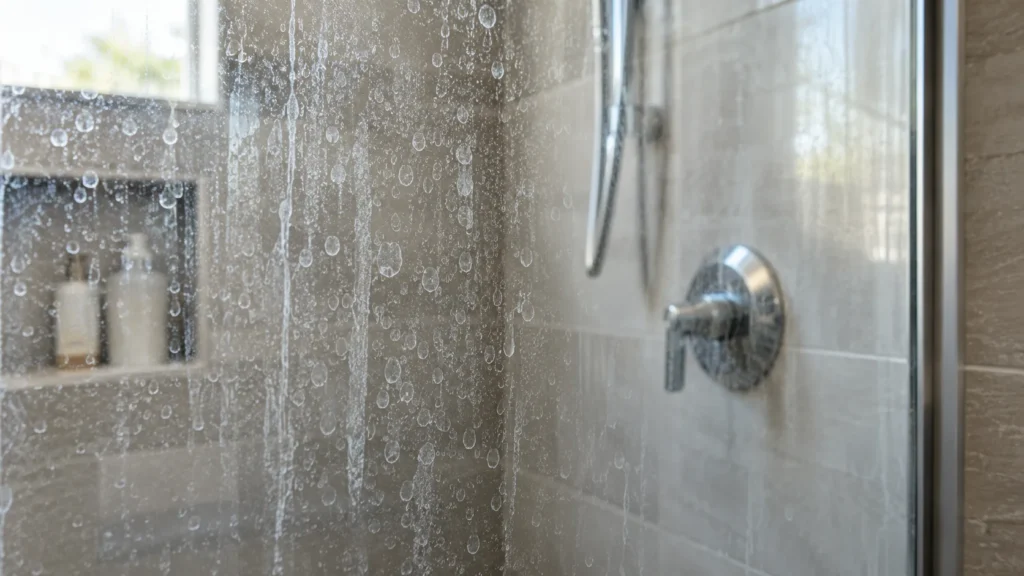
Hard water contains dissolved minerals, primarily calcium and magnesium. When shower water evaporates, some of these minerals remain on the glass.
Over time, the deposits may create:
- White water spots
- A cloudy or chalky film
- Rough areas on the glass
- Mineral buildup around fixtures
- Marks that return shortly after cleaning
Soap, shampoo, body oils, and cleaning-product residue can stick to the mineral layer. This combination may make shower glass appear dirty even after a normal bathroom cleaning.
Hard water stains and soap scum are related but are not exactly the same. Soap scum often feels waxy or greasy, while mineral deposits usually feel dry, rough, or chalky.
What You Will Need
Before cleaning the shower glass, gather the following items:
- Distilled white vinegar
- Warm water
- A clean spray bottle
- Microfiber cloths
- A non-scratch sponge
- A shower squeegee
- Protective gloves
- A glass-safe mineral remover for stubborn deposits
Open a window or run the bathroom exhaust fan while cleaning. Read all product labels before beginning, especially if you previously used another cleaner on the glass.
Method 1: Use Diluted White Vinegar
Diluted white vinegar is a common starting method for mild mineral deposits on ordinary glass. Its acidity can help loosen calcium-based residue.
Step 1: Check the surrounding materials
Before spraying vinegar, inspect the frame, floor, walls, and shower surround.
Do not use vinegar on marble, travertine, limestone, or other acid-sensitive natural stone. The Natural Stone Institute warns that vinegar, lemon, and other acidic cleaners can dull or etch calcareous stone.
If you do not know what material surrounds your shower, use a manufacturer-approved neutral cleaner or contact a professional.
Step 2: Remove existing cleaner residue
Rinse the shower glass thoroughly with water. This is especially important if bleach, ammonia, or another bathroom cleaner was recently used.
The CDC advises never mixing bleach with ammonia or any other cleaner, because dangerous fumes may be produced.
Step 3: Apply the solution
Combine equal parts warm water and white vinegar in a clean spray bottle. Test it on a small, inconspicuous section of glass before treating the entire door.
Spray the solution directly onto the stained glass. Avoid spraying natural stone, painted surfaces, sensitive metal finishes, and rubber seals.
Step 4: Let it work
Allow the solution to sit for approximately 10–15 minutes. Do not let it dry completely.
For a difficult vertical spot, place a vinegar-dampened paper towel against the affected glass to keep the area wet. Make sure the liquid does not run onto acid-sensitive materials.
Step 5: Wipe without scratching
Use a damp microfiber cloth or non-scratch sponge. Work gently in small sections instead of applying heavy pressure.
Avoid steel wool, rough scouring pads, and abrasive powders. These products may scratch glass or damage a protective coating.
Step 6: Rinse and dry
Rinse the entire area with clean water. Use a squeegee to remove the remaining moisture and finish with a dry microfiber cloth.
Inspect the glass from different angles. Repeat the treatment once if necessary rather than scrubbing aggressively.
Method 2: Use a Glass-Safe Mineral Deposit Remover
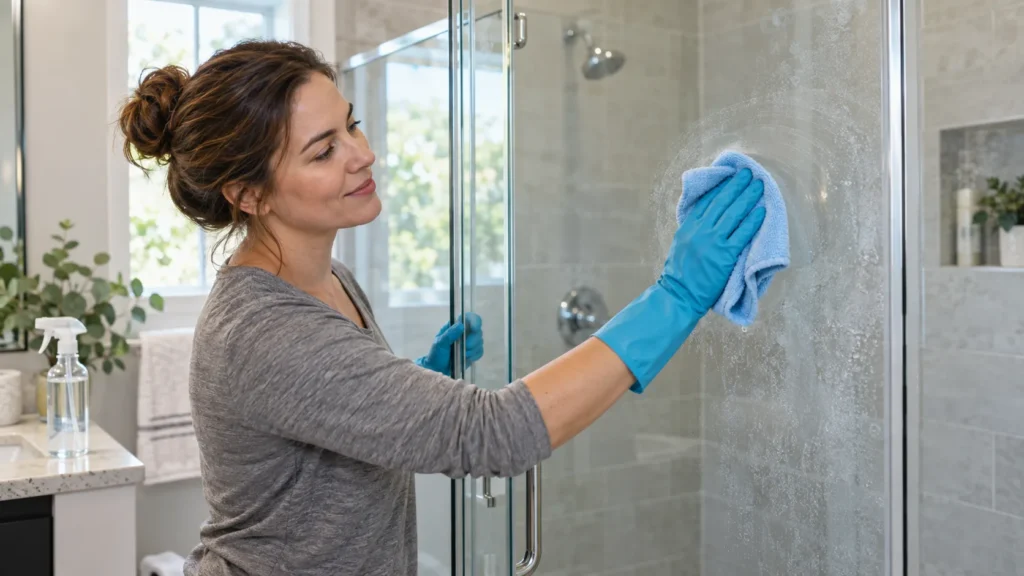
A commercial hard-water stain remover may be more effective when mineral buildup has accumulated for months or years.
Choose a product that clearly states it is safe for:
- Shower doors
- Glass surfaces
- The type of coating on your glass
- Nearby fixtures and tile
Follow the manufacturer’s directions for application, ventilation, protective equipment, and contact time. More product or a longer soaking period does not necessarily produce a better result and may damage the surface.
The EPA Safer Choice product search can help homeowners find cleaning products that meet the program’s ingredient and safety standards.
Do not combine a commercial mineral remover with vinegar, bleach, ammonia, hydrogen peroxide, or another cleaning product.
Can Baking Soda Remove Hard Water Stains?
Baking soda is frequently recommended online, but it is mildly abrasive. It may help remove some residue, but it can also leave fine marks on coated or delicate glass when used with aggressive scrubbing.
For this reason, baking soda should not be the first choice for an expensive shower enclosure. Check the glass manufacturer’s care instructions before using any abrasive paste or powder.
A microfiber cloth and an approved glass cleaner are safer starting options.
What Should You Avoid Using on Shower Glass?
Avoid these common cleaning mistakes:
Mixing cleaning products
Never mix bleach with vinegar, ammonia, or another cleaner. Use one product at a time and rinse the surface thoroughly before changing methods.
Using rough tools
Steel wool, razor blades, hard brushes, and abrasive pads can scratch glass or remove protective coatings.
Applying acid to natural stone
Vinegar and other acidic cleaners can damage marble, travertine, limestone, and some grout or sealants.
Ignoring the manufacturer’s instructions
Some shower doors have factory-applied coatings that require specific cleaning products. Check the warranty or care guide before using vinegar or a mineral remover.
Letting cleaners dry on the surface
A cleaning solution that dries on the glass may leave additional streaks or residue. Work in manageable sections and rinse completely.
How to Prevent Hard Water Stains From Returning
Removing mineral buildup is easier when stains are treated early. A short routine after each shower can reduce the amount of deep cleaning required later.
Use a squeegee after every shower
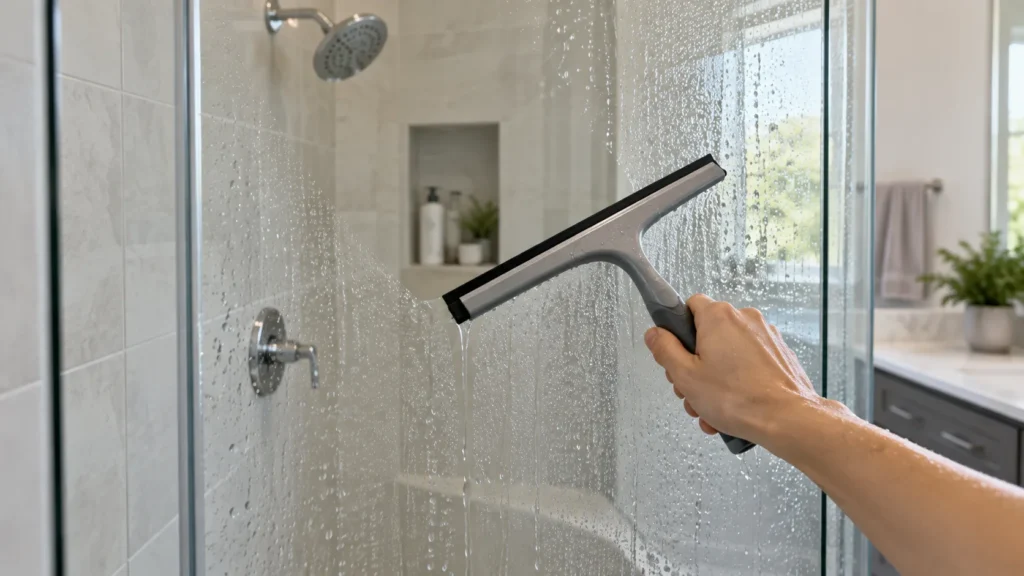
Removing water droplets before they evaporate prevents many mineral spots from forming. It usually takes less than one minute.
Dry the edges and frame
Water often collects near the bottom of the door, around seals, and beside metal fixtures. Wipe these areas with a microfiber cloth.
Clean the glass weekly
A light weekly cleaning prevents thin mineral deposits and soap residue from developing into a cloudy layer.
A regular routine can be combined with the recommendations in our house cleaning schedule guide.
Improve bathroom ventilation
Run the exhaust fan during the shower and for a short period afterward. Better airflow helps the room dry and may reduce moisture-related bathroom problems.
Repair dripping fixtures
A showerhead or faucet that continues dripping leaves water on the same area repeatedly. Repairing the leak can help prevent concentrated mineral deposits.
Consider water treatment
If hard-water deposits return quickly throughout the home, a water-softening or filtration professional can test the water and explain available treatment options.
Advice for Houston Homeowners
The amount of buildup can vary between Houston homes based on the local water supply, plumbing system, water heater, shower use, and how often the glass is dried.
Houston’s warm conditions also mean bathrooms may remain damp when ventilation is limited. Homeowners should pay particular attention to shower-door seals, tracks, grout lines, exhaust fans, and areas where water collects.
If the shower has natural stone, decorative metal, an unknown protective coating, or extensive mineral scale, professional cleaning may be safer than experimenting with multiple products.
You can compare house cleaning companies serving Houston through the HomeProsly directory.
When Should You Hire a Professional Cleaner?
Consider professional cleaning when:
- The stains remain after two careful treatments
- The glass has a thick, rough mineral layer
- You cannot identify the glass coating
- The shower contains marble or another sensitive material
- The enclosure is large or difficult to reach safely
- You need the entire bathroom deep-cleaned
- You are preparing a property for sale or move-out
Ask the company what products it uses, whether it has experience with coated shower glass, and whether hard-water stain removal is included in the quoted price.
Our guide to house cleaning prices in Houston explains the factors that may affect the cost of professional service.
Frequently Asked Questions
What is the fastest way to remove hard water stains from shower glass?
For mild stains on ordinary uncoated glass, apply equal parts warm water and white vinegar, wait 10–15 minutes, wipe with a microfiber cloth, rinse, and dry. Always test a small area first.
Can vinegar damage a glass shower door?
Diluted vinegar is commonly used on ordinary glass, but it may affect certain protective coatings, metal finishes, grout sealers, and surrounding natural stone. Check the manufacturer’s instructions before using it.
Why do hard water stains keep returning?
The spots return because mineral-containing water remains on the glass and evaporates. Using a squeegee and drying the door after each shower can significantly reduce new deposits.
Will bleach remove hard water stains?
Bleach is not designed to dissolve mineral deposits. More importantly, bleach must never be mixed with vinegar, ammonia, or other cleaners.
Can old hard water stains become permanent?
Long-term mineral buildup may etch or damage some glass surfaces. If repeated gentle cleaning does not improve the appearance, consult a glass-care or professional cleaning specialist.
Final Thoughts
The best way to remove hard water stains from shower glass is to begin with the gentlest method suitable for the surface. Identify the surrounding materials, test a hidden area, avoid abrasive tools, and never mix cleaning chemicals.
Once the glass is clean, use a squeegee after each shower and include the door in your weekly cleaning routine. Consistent maintenance is faster, safer, and easier than removing months of mineral buildup.
Leave a Reply